
Mechanical Proficiency Testing
NAPT’s Mechanical Proficiency Testing programs help laboratories evaluate performance across key mechanical parameters such as force, torque, pressure, and mass while supporting compliance with ISO/IEC 17025 and other quality management standards.
As an ISO/IEC 17043:2023 accredited proficiency testing provider through the ANSI National Accreditation Board (ANAB), NAPT delivers trusted, statistically valid interlaboratory comparisons (ILCs) designed to help labs demonstrate technical competence and maintain confidence in their results.
Mechanical testing in metrology goes beyond simple verification — it ensures every instrument used to measure physical quantities performs accurately under real-world conditions. From torque transducers to pneumatic gauges, even minor deviations can affect reliability, efficiency, and safety across critical systems.
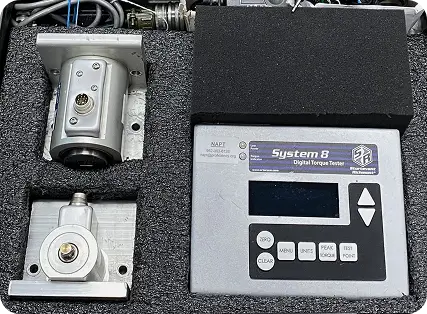
What Is Mechanical Proficiency Testing?
Mechanical proficiency testing evaluates a laboratory’s ability to measure mechanical quantities such as force, torque, pressure, and mass using traceable artifacts such as load cells, torque transducers, pressure gauges, force gauges, and calibrated mass standards. Participants complete assigned measurements, submit results, and receive an independent statistical analysis that includes z-scores and peer comparison data.
Unlike traditional calibration, which adjusts a single instrument, proficiency testing validates a laboratory’s entire measurement process instruments, personnel, procedures, and uncertainty estimation. This comprehensive evaluation helps confirm traceability to national or international standards, detect bias, and verify that measurement systems are producing reliable and reproducible results.
The process is performed under NAPT’s ISO/IEC 17043 accreditation and helps laboratories identify bias, confirm traceability, and strengthen compliance with ISO/IEC 17025 and ISO 9001 principles.
The Value of PT Testing
Why It Matters
Accurate mechanical measurements are essential for product safety and performance. Even small deviations can lead to failures, costly rework, or audit findings.
Participation in NAPT’s Mechanical Proficiency Testing programs helps laboratories:
- Demonstrate compliance with ISO/IEC 17025
- Detect and correct out-of-tolerance instruments
- Strengthen internal quality control and training
- Improve traceability and uncertainty analysis
- Support a strong quality management system (QMS)
Regular participation ensures that your mechanical instruments remain accurate and traceable throughout their lifecycle, protecting your organization’s credibility and operational confidence.

Driving Industry Precision
Industries That Rely on Mechanical Testing
Mechanical proficiency testing supports accuracy and consistency across a wide range of industries where precision directly affects performance, safety, and compliance. By ensuring measurements are traceable and repeatable, laboratories help reduce costly rework, strengthen audit readiness, and maintain customer trust.
- Aerospace and Defense — Validating load, torque, and pressure systems used in flight-critical components. Reliable mechanical testing ensures that every part meets strict design tolerances and safety regulations.
- Automotive and Transportation — Ensuring measurement reliability for safety-critical parts such as engines, braking systems, and structural components. Accurate mechanical calibration helps manufacturers meet global performance and emissions standards.
- Manufacturing and Engineering — Supporting the calibration of load cells, torque sensors, and gauges that drive production quality. Proficiency testing helps detect process variation early and ensures product uniformity across production lines.
- Medical and Biotech Laboratories — Maintaining pipette and mass measurement accuracy for pharmaceutical testing and laboratory research. Proper calibration safeguards data integrity and compliance with FDA and ISO standards.
- Energy and Utilities — Verifying pneumatic and hydraulic pressure systems used in power generation and field instrumentation. Consistent results prevent costly downtime and ensure compliance with safety codes.

Available Mechanical Testing Kits
Each Mechanical Proficiency Testing Kit is intentionally designed with subtle challenges that reflect real-world laboratory conditions such as temperature variation, instrument drift, or handling differences. This helps participants identify potential sources of bias or error before they affect quality outcomes.
Additional Mechanical Kits Available
In addition to the core kits listed above, NAPT offers a wide range of specialized mechanical proficiency testing kits to meet advanced calibration and testing needs:
Evaluate pipette performance across volumes from 50 to 1000 µL.
Cover pneumatic and hydraulic applications from vacuum up to 10,000 psi.
Assess the accuracy of torque transducers, screwdrivers, and wrenches across ranges from 20 ozf-in to 1000 Nm.
Verify Rockwell hardness standards from 20–65 HRC and 45–100 HRBW for metals and composites. Vibration and Acceleration Kits – Evaluate accelerometers and vibration sensors from 10 Hz to 10 kHz to ensure reliable performance in dynamic environments.
Validate tachometer and stopwatch accuracy for rotational and time-based systems.
NAPT continues to expand its catalog to meet the evolving needs of the metrology community. More mechanical kits are available through NAPT’s catalog for laboratories seeking customized or discipline-specific proficiency testing options.
How The Process Works

Request a Kit

Perform Measurements

Submit Results

Review Report

Take Action
Featured Mechanical Testing Kits
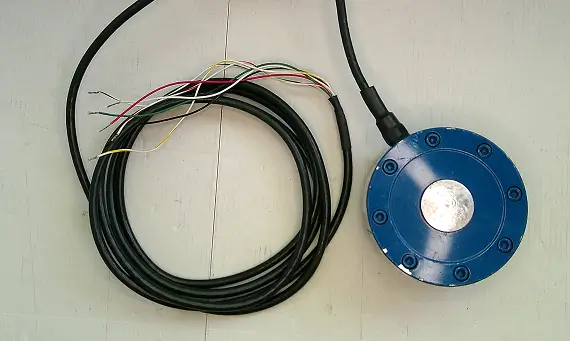
1000 lb Load Cell / NAPT-FORCE-203
The intent of this ILC/PT is to provide a means for the participant to determine the appropriateness and effectiveness of participant practices, training, and measurement uncertainty relating to measuring the mV/V output of a force transducer. Participants will use their lab practices to perform 8 Load Cell force measurements from 100 lbf to 1000 lbf, and Load Cell Input and Output Resistance. The expected uncertainty of this 3 mV/V transducer is largely dependent on the calibration process and equipment used and will vary from 20 uV to 500 uV.
View Kit Details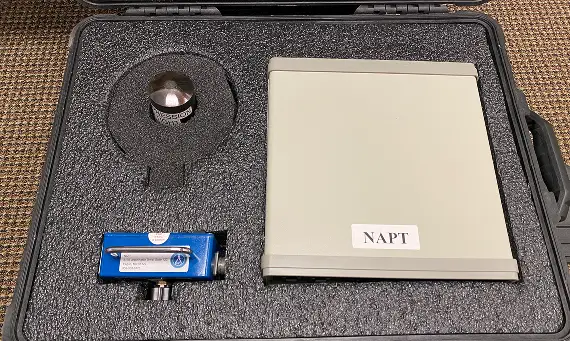
Master Load Cell 25,000 lbf / NAPT-FORCE-800
Master Load Cell 25,000 lbf / NAPT-FORCE-800rThe intent of this ILC/PT is to provide a means for the participant to determine the appropriateness and effectiveness of participant practices, training, and measurement uncertainty relating to testing and calibration of Force Measuring Load Cells using known compression force loads. The NAPT artifact chosen for this ILC has a range (0 to 25 000) lbf with a Manufacturer stated accuracy of 0.01% of full scale. See the Specific Test for a detailed description.
View Kit Details