
Time / Frequency Proficiency Testing
Ensure accuracy where time and frequency define performance.
NAPT’s Time / Frequency Proficiency Testing programs help laboratories validate their measurement accuracy. Our testing kits support labs in meeting accreditation requirements and demonstrating technical competence across critical timing and frequency applications.
What Is Time / Frequency Proficiency Testing?
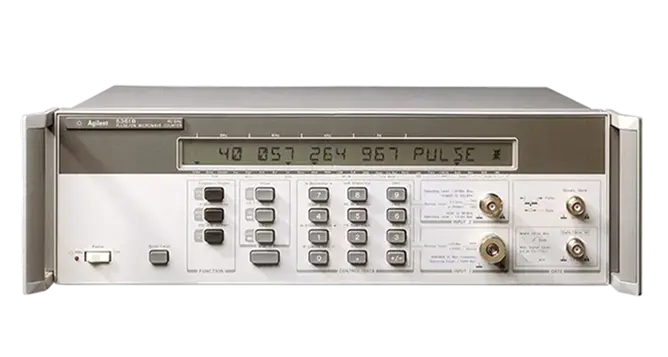
Time / Frequency proficiency testing checks how well your lab can measure frequency, time base, and time interval parameters. This covers DC, low-frequency, and RF ranges.
These programs use traceable artifacts and interlaboratory comparisons (ILC/PT). You can verify your testing practices by comparing your results to reference values and peer laboratories. This helps you find issues like bias, instability, or uncertainty gaps before they affect compliance or customer confidence.
The Value of PT Testing
Why It Matters
Accurate time and frequency measurements are essential. They support modern communications, electronics, navigation, and calibration systems. Even small errors can cause system failures or put your accreditation at risk.
NAPT’s Time / Frequency programs help your lab:
- Maintain ISO/IEC 17025 accreditation
- Verify your DC and RF measurement accuracy
- Detect drift or instability in frequency standards
- Strengthen quality assurance and technical training
- Build customer trust in your frequency testing services
Driving Industry Precision
Industries That Rely on Time / Frequency Testing
Many industries depend on precise time and frequency measurements for calibration, safety, and sample synchronization. This is especially important in sectors adhering to ISO/IEC 17025 standards, such as:
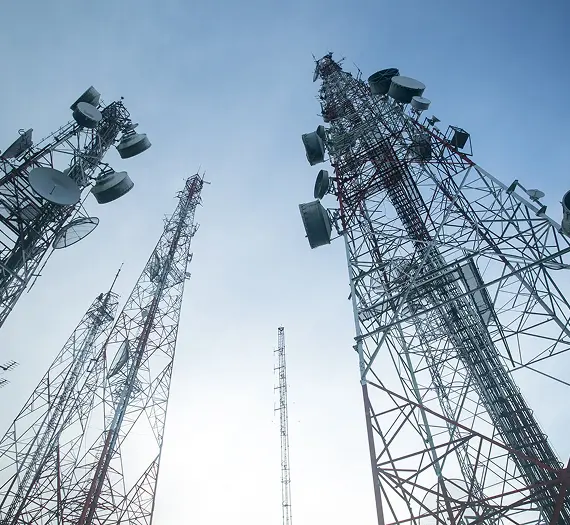
- Telecommunications — Network stability and synchronization testing
- Aerospace & Defense — Navigation, radar, and timing system validation
- Electronics & Semiconductor — Clocking, signal generation, and equipment calibration
- Calibration & Metrology Labs — Accreditation support and peer comparison
- Industrial & R&D Labs — Verification of frequency sources and timing devices
The NAPT Difference: Time / Frequency Testing Kits
Our kits are designed with real-world measurement challenges. These include signal stability variation, noise, resolution limits, and uncertainty sensitivity. These conditions help you test your practices before issues impact accreditation or customer results.
Common Types of Time & Frequency Kits:
Test frequency calibration from 1 kHz to 12 GHz. Covers low-frequency and RF signal generation and measurement.
Check frequency sensitivity, time interval measurement, and 10 MHz time base stability.
Verify frequency source accuracy from 0.05 Hz to 15 MHz.
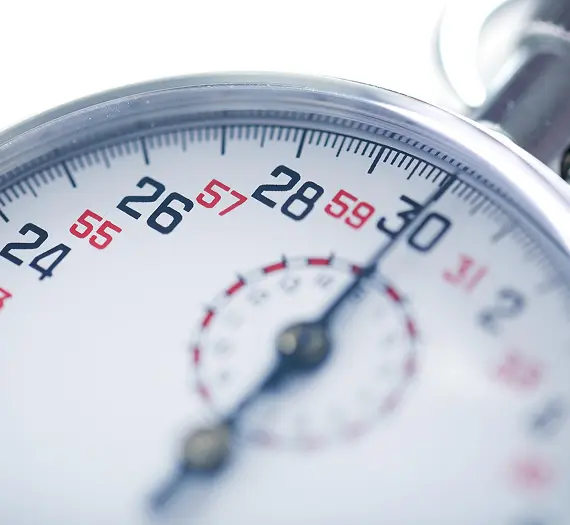
Validate stopwatch calibration from 0.01 to 1500 seconds.
Test rotational speed accuracy from 12 to 150,000 FPM.
Demonstrate proficiency in calibrating precision frequency standards.
Support electrical measurement verification where timing and frequency precision matter.
NAPT continues to expand our catalog. We add new kits to meet the needs of telecommunications, electronics, and calibration laboratories. Custom program options are available for specialized requirements.
How The Process Works

Request a Kit

Receive and Measure

Submit Results

Review Report

Take Action
Featured Time / Frequency Testing Kits
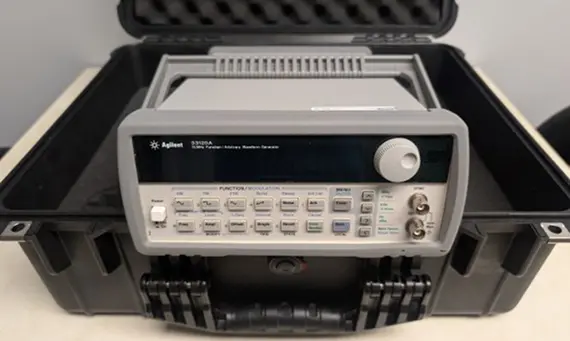
Function Generator / NAPT-FREQUENCY SOURCE-2522
This ILC/PT Kit contains a: Hewlett Packard Function/Arbitrary Waveform Generator, Model 33120A (option 001: Phase Lock / TCXO Time base – 4 ppm/year). The participant will configure the Function/Arbitrary Waveform Generator, using the Internal Time Base, to generate sine wave signals of 1 Volt (RMS) amplitude in the frequency range of 0.05 Hz to 15 MHz and then measure 14 different frequencies using their laboratory standards and report their associated measurement uncertainty.
View Kit Details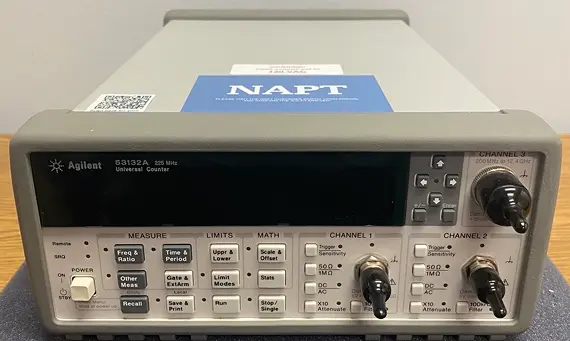
Frequency Counter / NAPT-ELECTRICAL-53132A
This ILC/PT Kit contains a HP 53132A (opt 012, 124) Frequency Counter. Participants will use their lab practices to perform 6 measurements; 1 Time Interval Measurement (0.15 µs); 4 Frequency Sensitivity Measurement (100k Hz to 200 MHz) in the range (-25 to -35 dBm), and 1 Time Base Measurement at 10 MHz. Measurement values will be appropriate for the calibration of similar devices.
View Kit Details